What is diamond fluorescence?
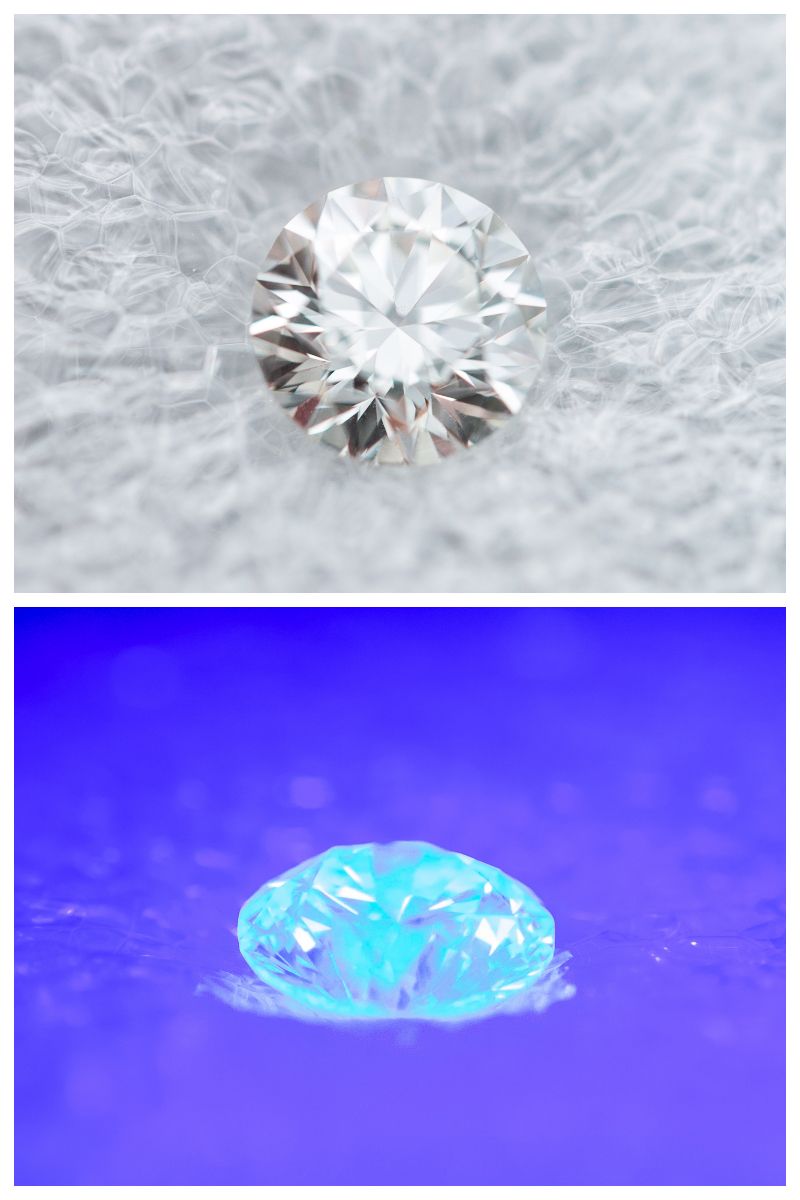
Let's talk about one of the most hotly debated topics in the diamond trade: fluorescence. First off — what is it? Diamond fluorescence occurs when the diamond itself emits light upon encountering ultraviolet (UV) light. UV light hits crystal structures present in fluorescent diamonds, the electrons in these structures go from a normal state to an excited state, then back to a normal state, emitting light. This release of light is called fluorescence and is typically blue in diamonds, but can also come in other colors. Fluorescence only occurs when a diamond is hit with UV light, typically from direct sunlight. It can be easily demonstrated by shining a blacklight onto the diamond.
Here's a diamond with medium fluorescence we photographed with bright, indoor lighting and then fluorescing under a blacklight:
Now you understand fluorescence, but why does it matter? Is it good or bad? Let’s start with some facts where there’s broad agreement:
- The color and degree of fluorescence are accurately identified on GIA reports
- 65% of GIA-graded diamonds display no fluorescence at all
- Less than 1% of diamonds fluoresce a color other than blue (yellow, white, orange, etc.)
- Fluorescence has no impact on the appearance of the diamond except when it is exposed to UV light
- Most customers can’t tell the difference between diamonds with medium fluorescence and no fluorescence, even under direct sunlight
- In direct sunlight, diamonds with strong or very strong blue fluorescence produce a subtle but noticeable visual effect
We’ve covered the facts first because there’s a lot of debate in the trade as to whether fluorescence is a negative, neutral, or positive trait. Let's take a look at some of the different industry opinions.
Theories why fluorescence might be a negative trait:
- Fluorescent diamonds are less pure than diamonds without fluorescence. D-F diamonds are prized for their colorlessness and fluorescence introduces more color.
- The stronger a diamond’s fluorescence, the higher its risk of being “over graded” for color. This theory says that some UV light is present in some of GIA’s grading laboratories. This UV light produces blue fluorescence that counteracts yellow tint, incorrectly boosting the diamond’s color grade.
- Fluorescence causes transparency issues in some diamonds. In addition to fluorescing blue, these diamonds are at high probability of looking hazy, milky, or oily. Proponents of this theory say that the stronger the fluorescence, the higher the risk of transparency issues, impacting most diamonds with very strong fluorescence. This effect is more likely the higher the diamond's color grade. The GIA acknowledges some correlation between strong fluorescence and hazy appearance, but argue that it's uncommon, accounting for less than 3% of fluorescent diamonds.
Theories why fluorescence might be a neutral trait:
- Fluorescence is characterized by the GIA as an “identifying characteristic” to distinguish individual diamonds from counterfeits, not as a grading characteristic.
- The effects of fluorescence are only present under strong UV light, which is relatively rare. Even when it is present (e.g. direct sunlight), the effect is mild.
- Brick and mortar retailers took to calling out fluorescence as a negative characteristic as a way to criticize diamonds sold online in the early days of internet diamond sales. This tactic was competitively motivated and not based on the actual visual beauty of the stone.
Theories why fluorescence might be a positive trait:
- Blue fluorescence counteracts yellow tint, making diamonds with grades G and below look whiter when UV light is present. The impurities that cause yellow tint absorb blue light, so it makes sense that adding blue light back in might have this effect.
- Fluorescent diamonds with D-H color sell at a 0-15% discount to comparable stones with no fluorescence.
- Blue fluorescence is a unique property that acts as an interesting additional feature. Many diamond owners love to see their center stone glow under a blacklight! In fact, some of our customers specifically request that we only show options with medium to strong fluorescence - and we're always happy to oblige.
Finally, the Loch Ness monster fluoresces blue so…ok, well that one’s not true, but you get the point. There's a whole mess of different viewpoints on fluorescence! You don’t have to review or understand all of them to make a smart diamond choice. First, you don't have to figure this out on your own! Our team will be happy to talk you through the possible trade-offs. Second, if the role of fluorescence was major and obvious there would be no debate. No one argues whether or not yellow color tint is real or whether or not inclusions are real because both are visible to anyone that compares the diamonds. If the secondary visual effects of fluorescence (haziness, color improvement, etc.) were obvious, there would be broad agreement. In fact, the effects occur only under UV light and are subtle enough that they provoke debate as to whether or not they even exist. They are also secondary to the primary effect, which is that the diamond will fluoresce blue!
Curious to see a few examples? Here are a handful of rings we recently created for our customers, with diamonds that have different levels of blue fluorescence. As you'd expect from what you've read above, the distinctions between these diamonds have more to do with their color, size, shape, and setting, and the diamond's fluorescence has no visible impact on what you see in the photo.
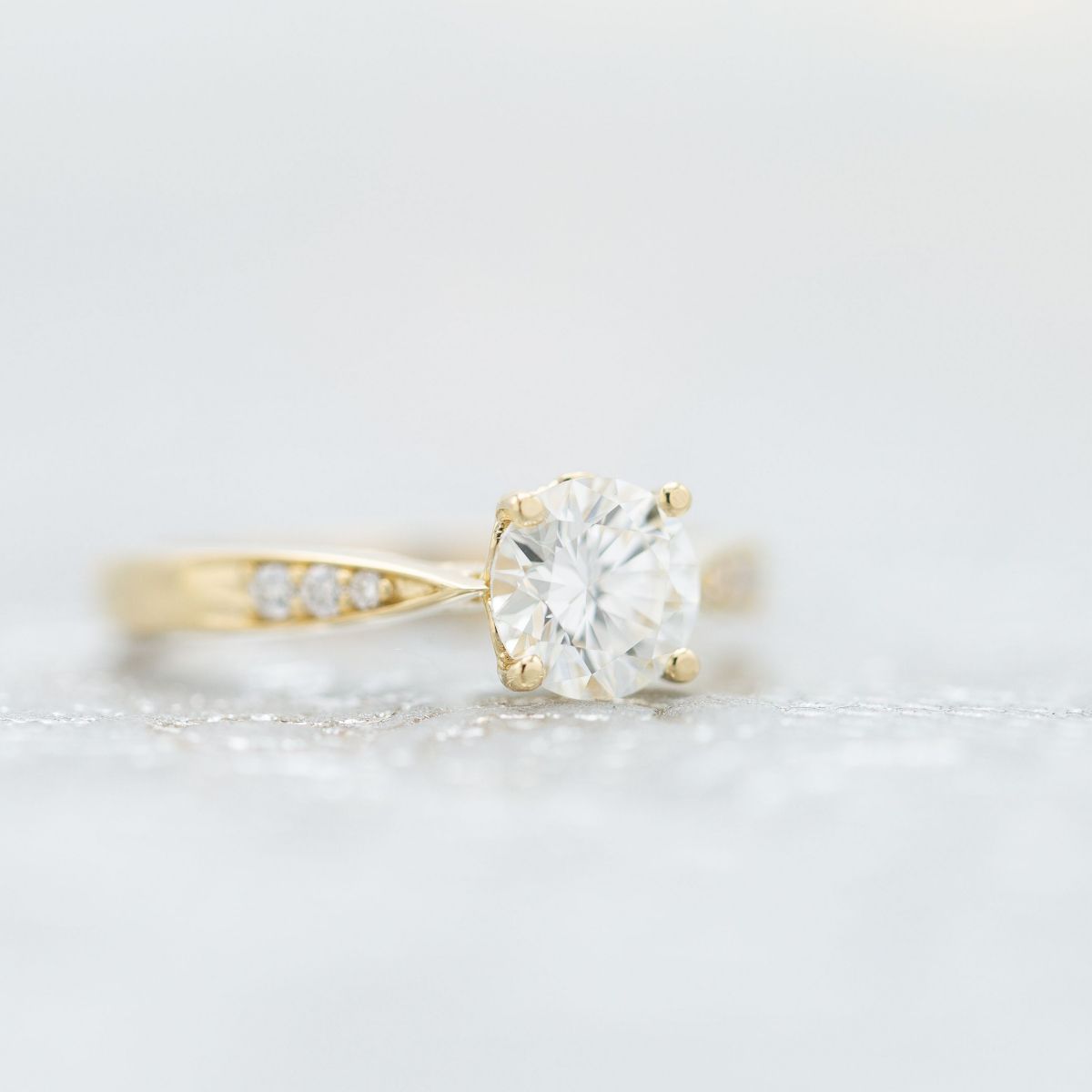
Round Brilliant Cut — Faint Fluorescence
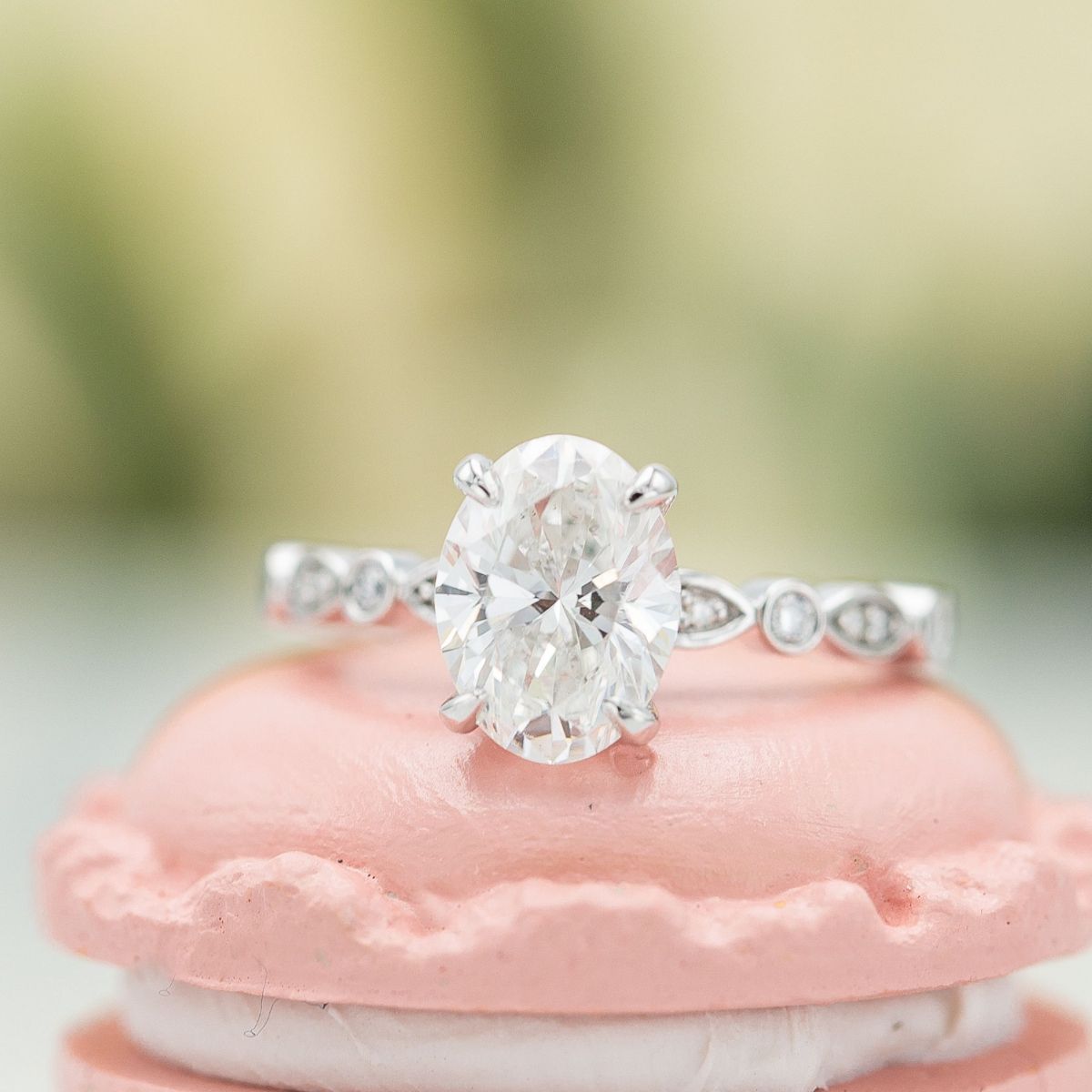
Oval Cut — Faint Fluorescence
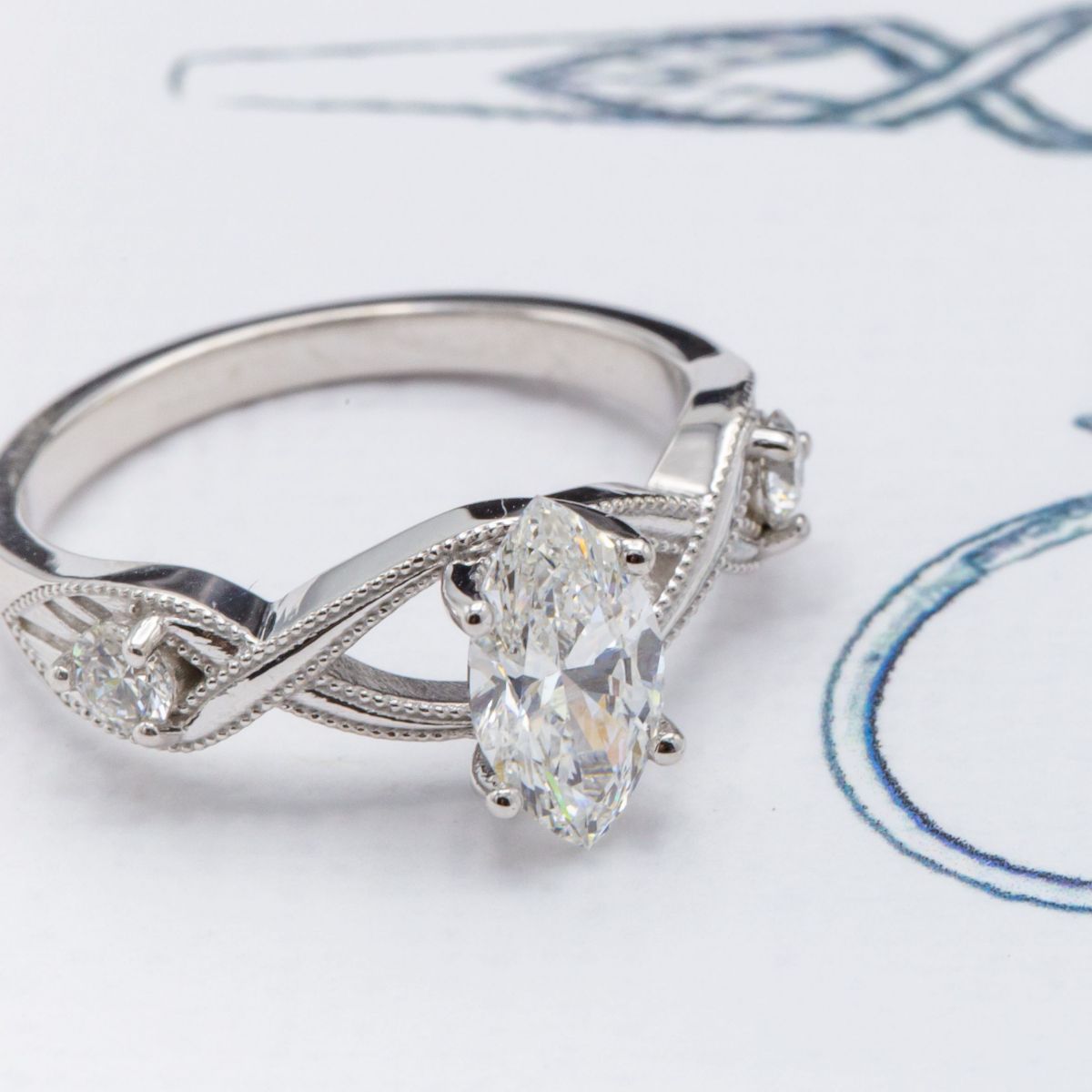
Marquise Cut — Medium Fluorescence

Round Brilliant Cut — Medium Fluorescence
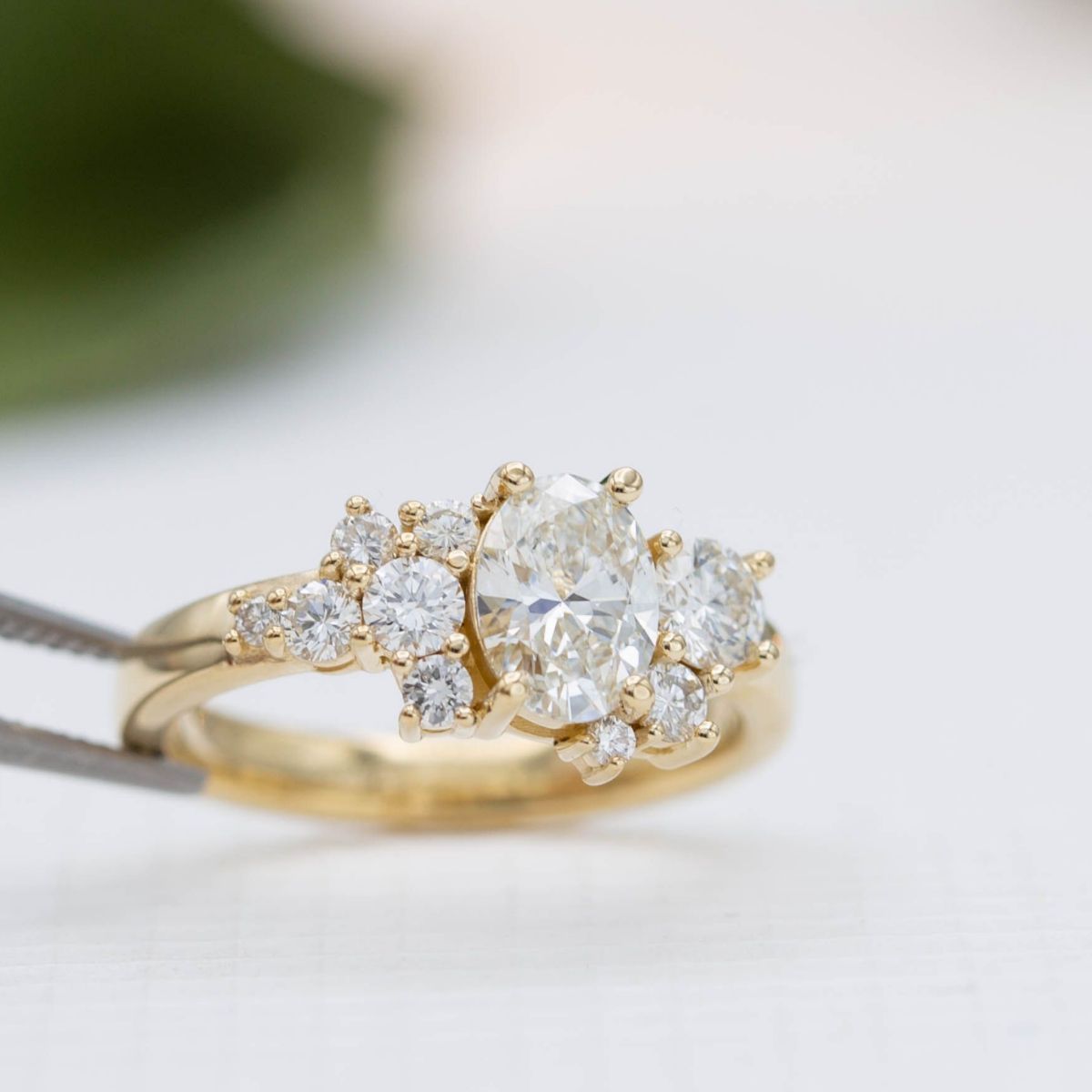
Oval Cut — Strong Fluorescence
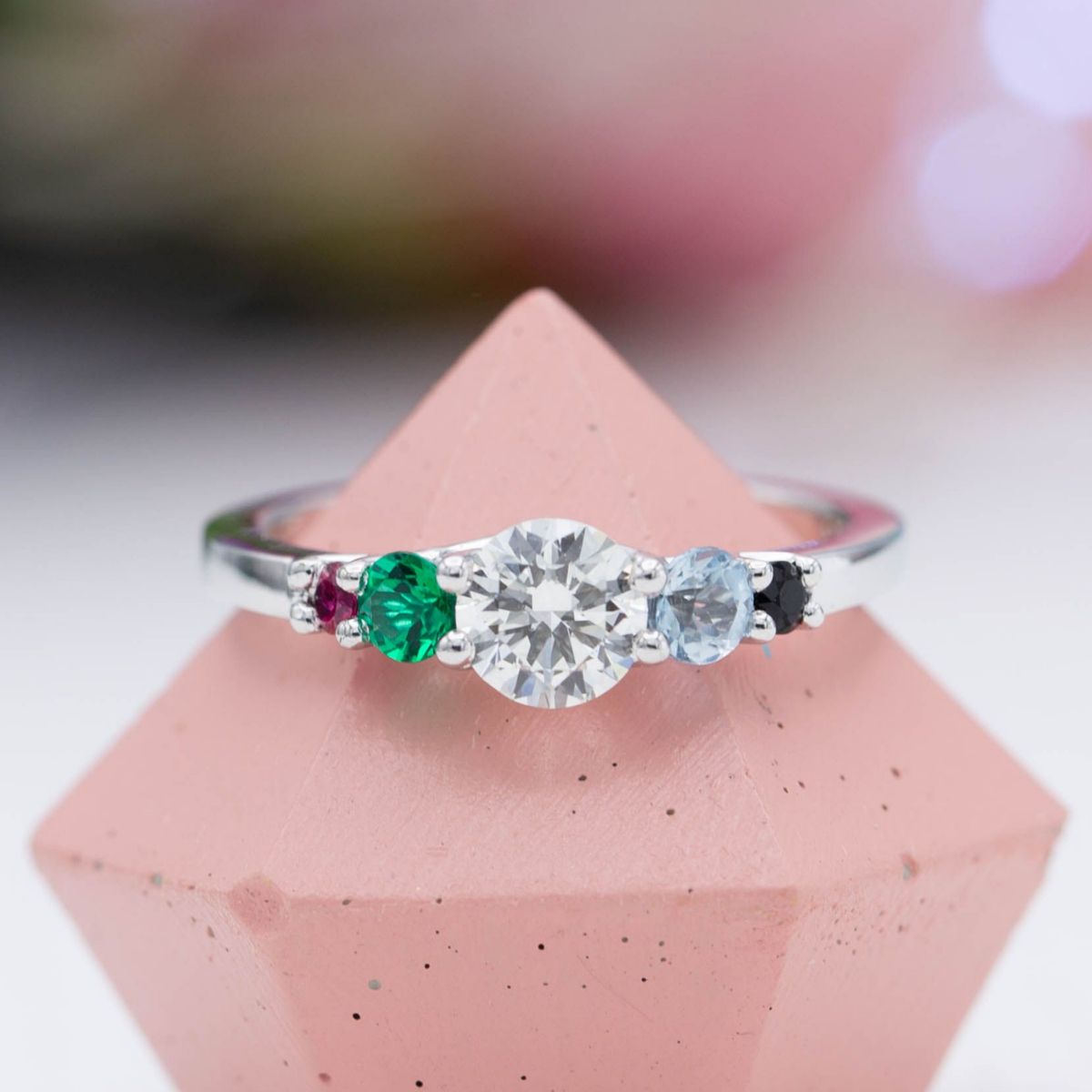
Round Brilliant Cut — Strong Fluorescence
Conclusions
So what does this all mean for your diamond selection? If you like the idea of a truly colorless stone in all conditions, stick to medium fluorescence or below. If you like the idea of your diamond having an interesting, mostly-hidden property that only comes out in UV light, consider strong or very strong fluorescence. This could also save you a little bit of money on your purchase.